4 Surprising Truths About the 2025 AI Revolution
4 Surprising Truths About the 2025 AI Revolution (That Nobody Is Talking About)
Introduction
The prevailing narrative around artificial intelligence is one of a relentless technological arms race, a force changing everything overnight. Headlines breathlessly track the latest model releases and predict seismic shifts in the global economy. It’s a story of unstoppable, exponential change.
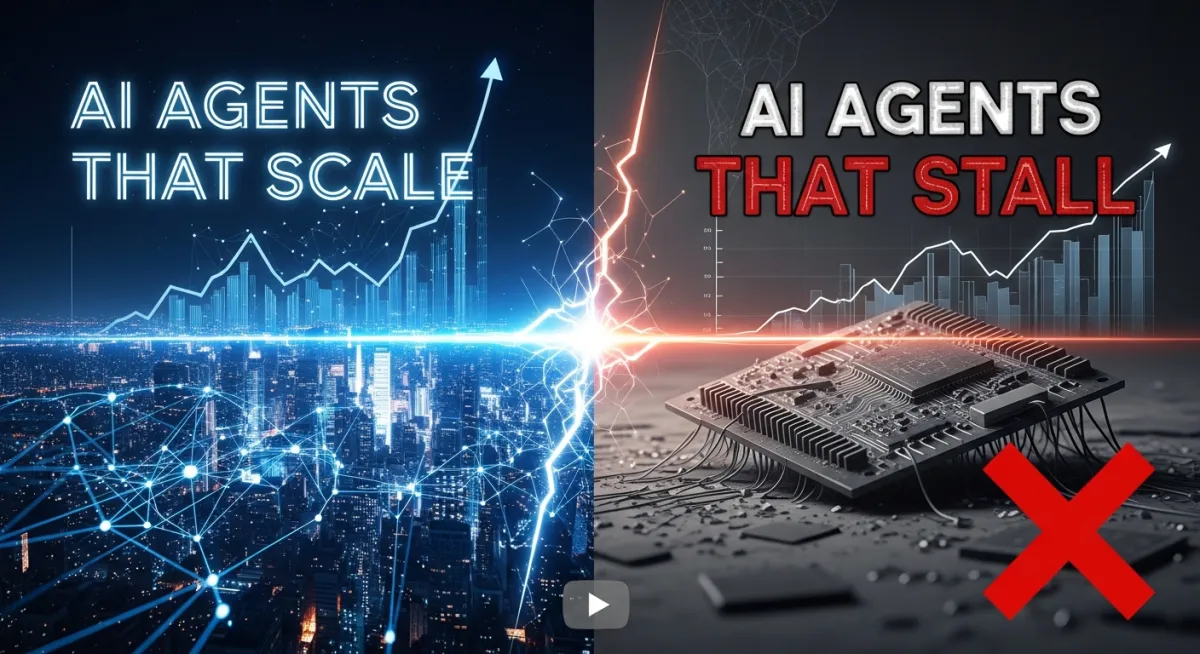
But a deeper look at recent landmark reports reveals a consistent, underlying story: while the technology soars, the organizational capacity to harness it is sputtering. From a widening skills gap to a surprising decline in maturity, the data points to a revolution defined less by technological velocity and more by human friction. These reports reveal a gaping chasm between AI's potential and the organizational reality of deploying it.
This post will distil four of the most impactful and unexpected takeaways from recent global studies—four critical symptoms of this central challenge. These are the truths that are shaping the next phase of the AI revolution, even if they aren't making the front page.
1. AI Isn't Stealing Jobs—It's Making Them More Valuable
The most common fear surrounding AI is its potential to automate jobs and displace human workers on a massive scale. It’s a narrative of obsolescence, where efficiency gains come at the cost of human employment. The data, however, tells a different story.
According to the PwC "2025 Global AI Jobs Barometer," which analysed close to a billion job ads and thousands of company financial reports, job numbers and wages are growing in virtually every AI-exposed occupation, including those considered the most automatable. This isn't a case of AI replacing humans, but of AI augmenting them. The evidence suggests a clear trend:
Industries most able to use AI are experiencing 3x higher growth in revenue per employee.
Workers with AI skills like prompt engineering command an average 56% wage premium.
This indicates that companies are not just using AI as an efficiency tool to cut headcount; they're deploying it as a growth strategy to make their workers more productive and valuable. By automating repetitive tasks, AI is freeing up human employees to focus on higher-level problem-solving, critical thinking, and creative work.
"AI amplifies expertise. It doesn’t replace your ability to think, it makes you a better thinker. It doesn’t replace your ability to solve problems, it makes you a better problem-solver."
— Matt Wood, Global and US Commercial Technology & Innovation Officer, PwC US
This concept of "amplifying expertise" is not just a platitude; it is the economic engine behind the 56% wage premium for AI-skilled workers and the 3x productivity growth in AI-exposed industries. Companies are paying for better thinkers and problem-solvers, not just button-pushers.
2. The AI Paradox: As Investment Soars, Corporate Capability Plummets
One would assume that as companies pour billions into AI, their capabilities and maturity would steadily increase. The reality is quite the opposite.
In a shocking finding from the ServiceNow "Enterprise AI Maturity Index 2025," which surveyed just under 4,500 executives worldwide, the average AI maturity score across global organizations has declined significantly, dropping 9 points from the previous year. The slowdown is widespread: fewer than 1% of all surveyed companies scored over 50 on the 100-point maturity scale, and even the single top-performing company saw its score fall by 13 points year-on-year. While the average score plummets, ServiceNow identifies an elite cohort of "Pacesetters" who are bucking the trend, suggesting the gap between the best and the rest is widening dramatically.
This paradox suggests that AI innovation is dramatically outpacing the capacity of most organizations to deploy it effectively and safely at scale. The research points to a "vision gap" at the leadership level and a critical lack of the governance guardrails necessary to manage the technology. This maturity paradox becomes clearer when we stop looking at the models companies are buying and start looking at the methods they are failing to implement.
3. The "Magic" Isn't the Model, It's the Method
Much of the public conversation around AI is fixated on the performance "arms race" between foundation models like GPT-4, Claude, and Gemini. The assumption is that choosing the "best" model is the primary key to unlocking value.
However, emerging research reveals that how an AI is implemented matters far more than which specific model is used. The concept of "agentic workflows"—where a complex task is broken down into a series of smaller steps managed by AI—is proving to be a game-changer. Rather than asking a model to produce a perfect answer in a single attempt, this method allows the AI to "think," plan, use tools, and iterate.
The results are staggering. A recent Fujitsu report highlighted research showing that an agentic workflow allowed a GPT-3.5 model to achieve a score of over 95% on the HumanEval benchmark, where it normally scores only 48.1% in a standard, single-prompt mode.
This insight shifts the entire paradigm of AI strategy. The real competitive advantage lies not in buying a license for the most powerful LLM, but in redesigning business processes to leverage AI in these more sophisticated, multi-step ways. It's fundamentally a strategy and process engineering challenge, not just a technology procurement one.
4. Regulation by Design: The AI Act's Deliberate Blind Spots
The European Union's AI Act has been rightly hailed as a landmark, first-of-its-kind regulation that is setting a global standard for AI governance. It’s a comprehensive attempt to classify AI systems by risk and impose strict rules on the most dangerous applications.
But a closer look reveals that even this pioneering law contains several significant and calculated exemptions that are rarely discussed. These intentional loopholes highlight the immense challenge of regulating a technology that is both powerful and pervasive. Key examples include:
Military & Security Exemption: The regulation does not apply to any AI systems used exclusively for military, defence, or national security purposes. These areas remain governed by separate, less transparent rules.
Policing Exceptions: The general ban on real-time biometric surveillance in public spaces (like facial recognition) includes specific exceptions for law enforcement, such as responding to a "foreseeable threat of terrorist attack."
"Social Scoring" Loophole: While the Act aims to prohibit generalized social scoring by governments, critics note that it explicitly allows for "lawful evaluation practices" for specific purposes. This could permit sector-specific scoring systems, such as the suspicion score used by the French family payments agency Caisse d'allocations familiales.
These carve-outs demonstrate that even the most ambitious regulations are not a silver bullet. They are a crucial starting point, but they are not the final word on ensuring ethical AI. Governing this technology will be an ongoing process of adaptation and refinement, not a one-time fix.
Conclusion
Taken together, these truths dismantle the narrative of an autonomous technological takeover. They reveal a revolution that is profoundly human-centric, where the winners are not those with the biggest models, but those with the smartest strategies for implementation, talent development, and governance. The bottleneck is not in the silicon; it's in the C-suite.
Ultimately, the story is less about runaway machines and more about human strategy, culture, and choice. The technology is a powerful tool, but its direction and impact remain firmly in our hands.
As we stand at this turning point, the most important question we face is not "What can AI do?" but rather, "How will we, as leaders and individuals, choose to direct its power?"


